Rain is a resource.
Not runoff.
Shoalwater builds green stormwater infrastructure that turns private properties into part of a healthier, more water-resilient watershed.
Our cities were built to shed water.
What if they absorbed it?
Rain moving across rooftops, roads, and pavement can carry pollution into our local waterways. Green stormwater infrastructure creates opportunities to capture, slow, filter, and absorb that rain closer to where it falls.

Manage polluted runoff closer to its source.
Capture, slow, infiltrate, and reuse rain where appropriate.
Support plants, habitat, soil, and greener urban spaces.
Turn local projects into documented community assets.
Small interventions.
Connected watershed impact.
The opportunity is already all around us—on rooftops, beside buildings, and across the landscapes of our neighborhoods.
One property at a time.
One watershed together.
A cistern behind a church. A rain garden beside a school. A restored system at a home. Each serves a property—but together, they can contribute to healthier watersheds across Puget Sound.
Illustrative regional network concept · Not a live map or measured impact
Cisterns
Capture and controlled release
Rain gardens
Absorb and filter rainfall
Bioretention
Slow and clean runoff
Permeable surfaces
Allow infiltration
GSI restoration
Restore existing assets
Project types and water benefits depend on site conditions, system design, and maintenance.
From property opportunity to working infrastructure.
Practical project delivery—from the first site conversation to a functioning, documented system.
Find the opportunity.
Assess roof area, runoff, property constraints, eligibility, and the right green infrastructure approach.
Plan the project.
Develop a practical site concept, identify relevant programs or funding, and define installation needs.
Build or restore.
Install cisterns and other GSI or rehabilitate existing systems to bring them back into service.
Make the work count.
Preserve project records, site information, installation evidence, and modeled benefits where appropriate.
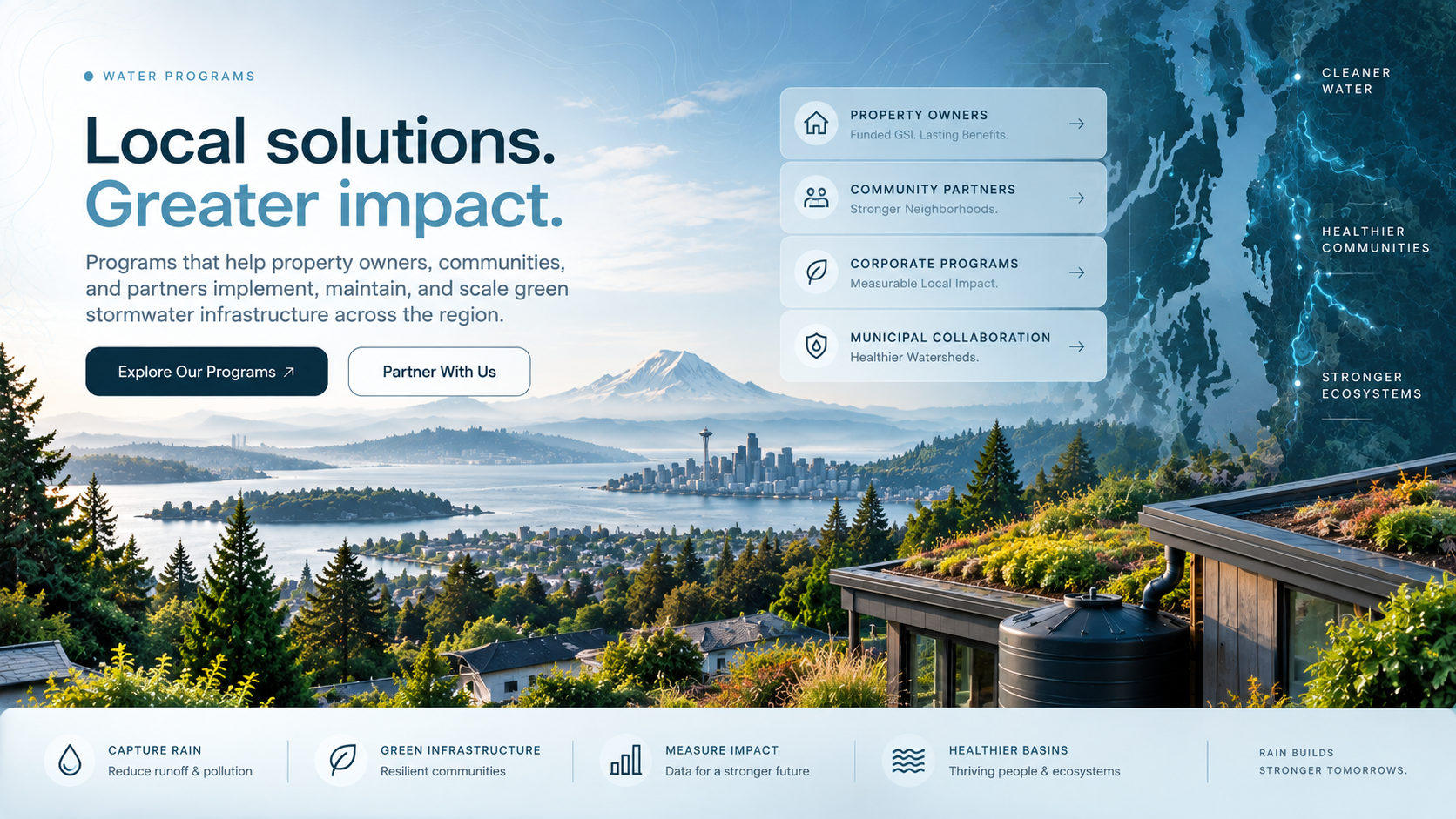
Local experience. Long-term perspective.
Shoalwater's approach is grounded in the practical work of developing, installing, documenting, and restoring green stormwater infrastructure on private property.
Every property is an opportunity.
Every installation is part of something bigger.
Explore green infrastructure for your property—or partner with Shoalwater to develop projects across your community or watershed.
Public rebates and funding depend on site and program eligibility; they are not available for every property.